Play Double Klondike Solitaire Online - Double the Cards, Double the Challenge
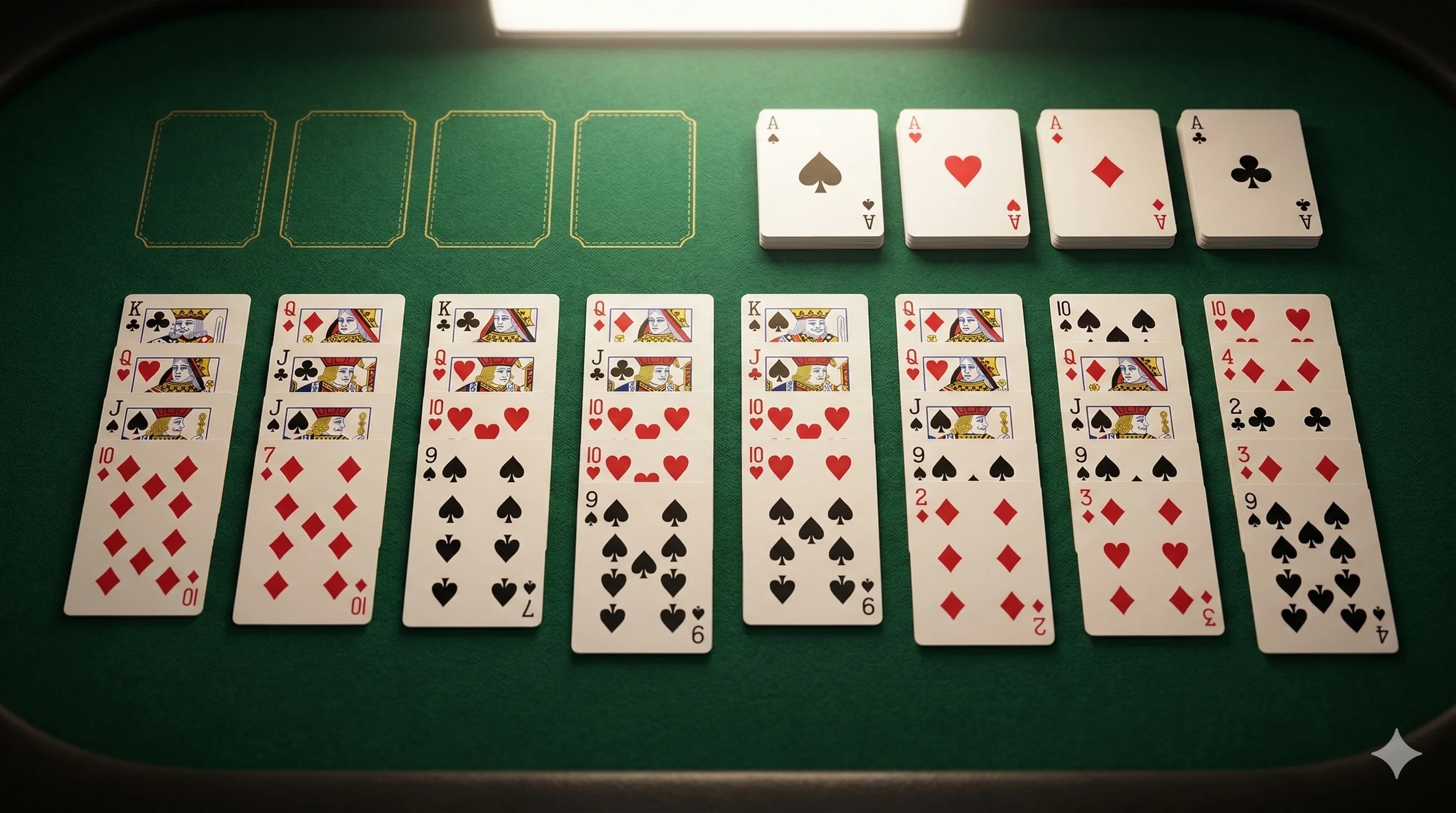
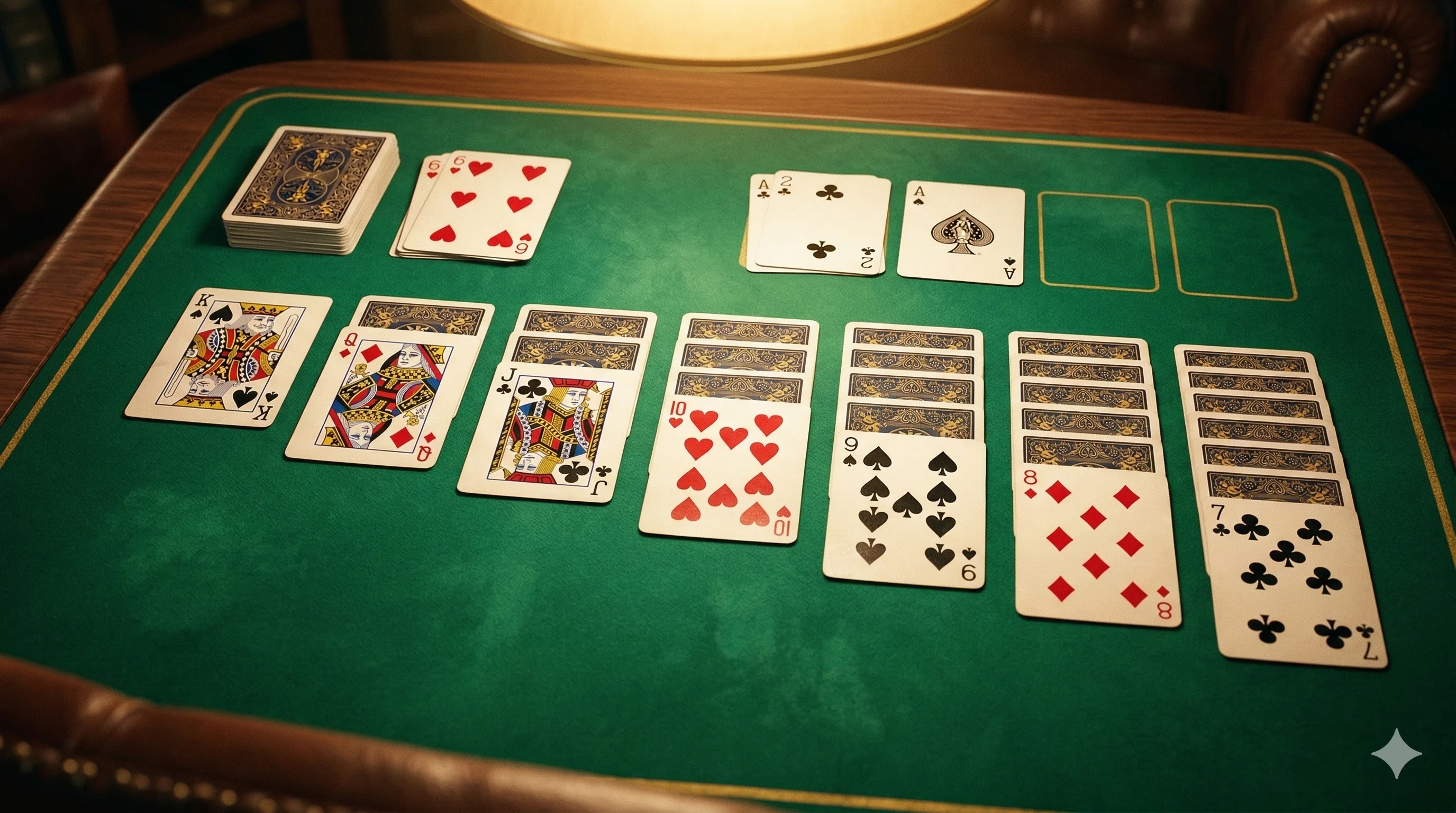
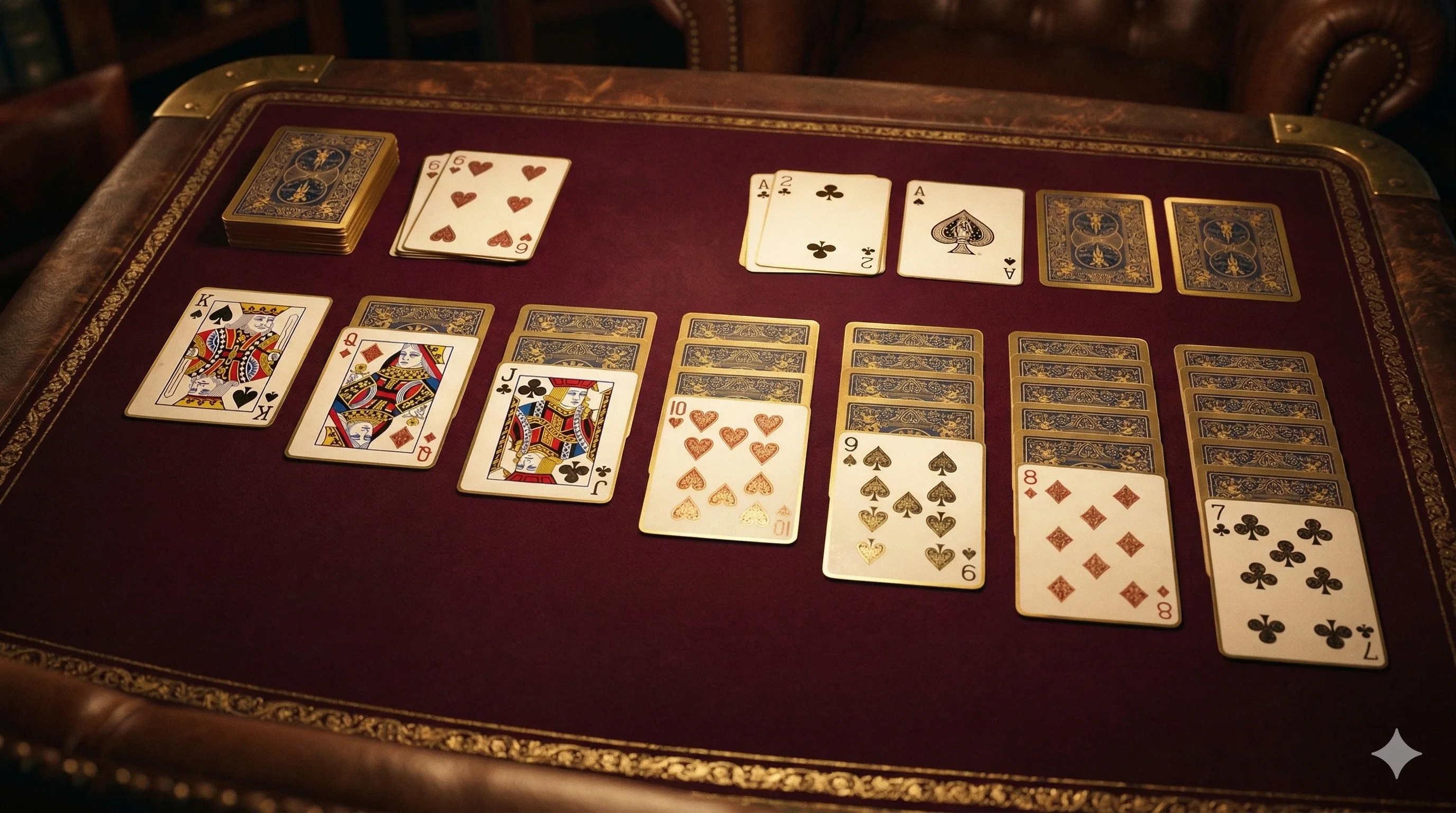
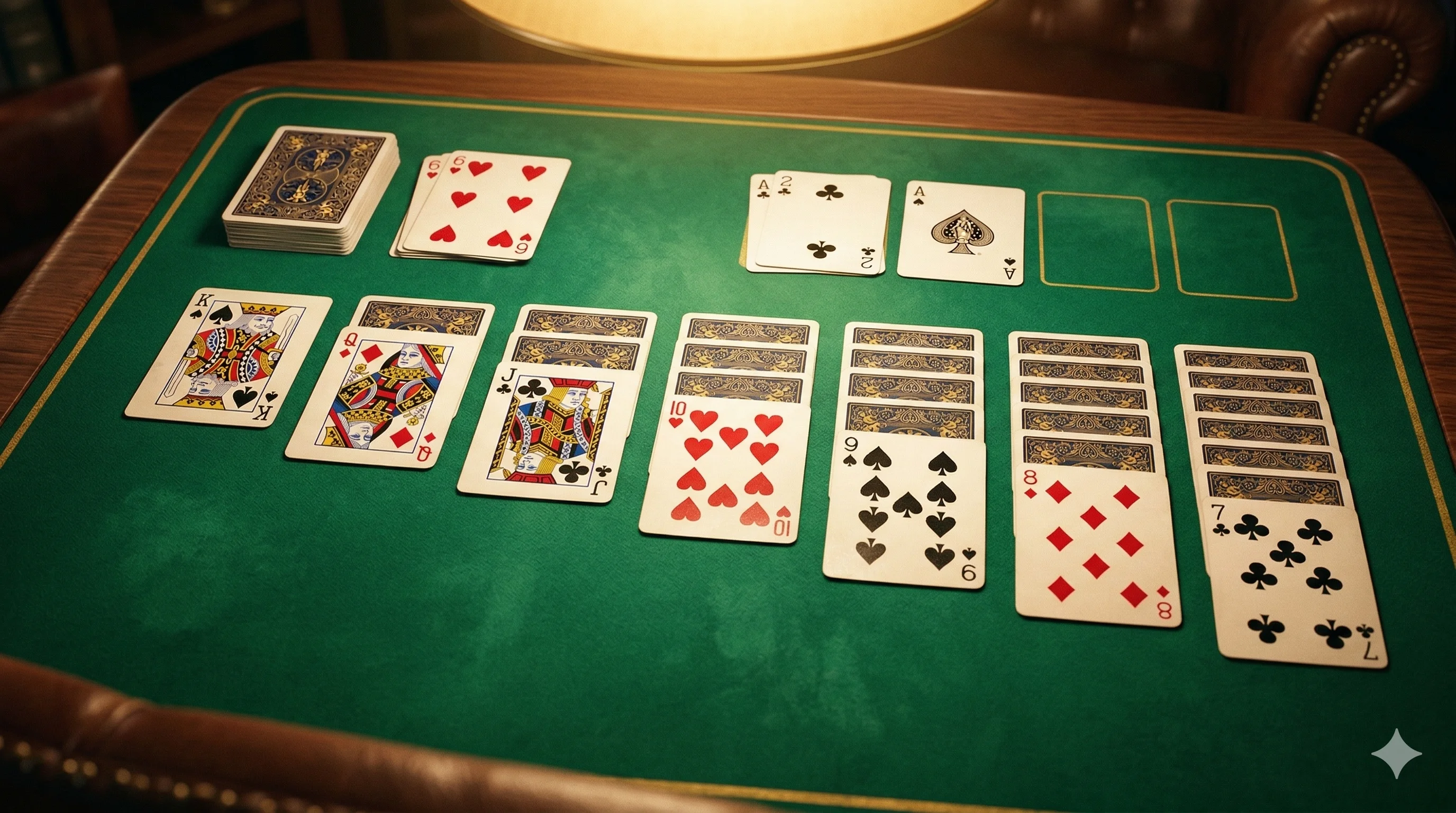
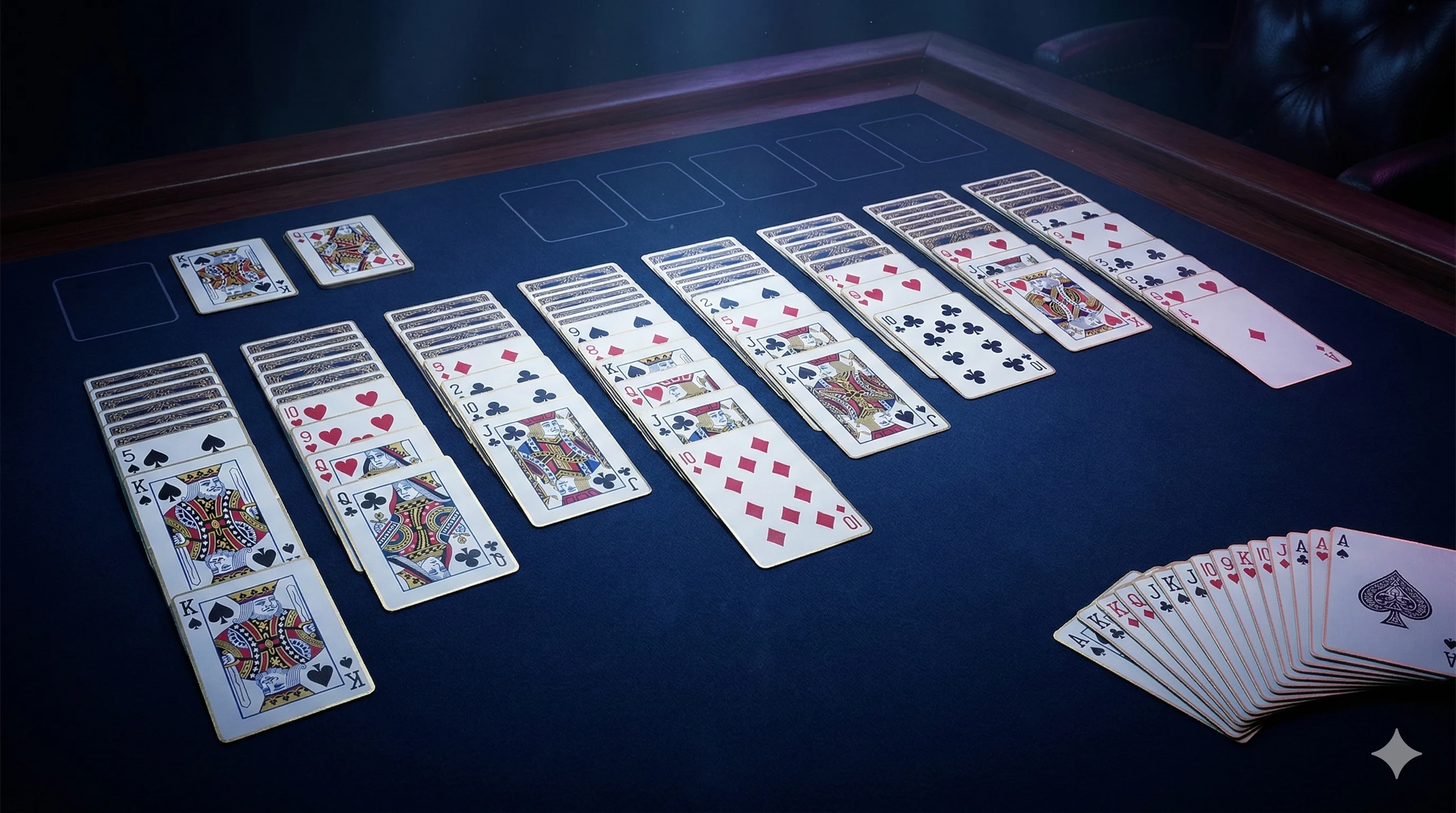
Double Klondike Solitaire (also known as Double Solitaire or Two-Deck Klondike) takes the classic Klondike game and expands it with two full decks of cards. With 104 cards to manage, nine tableau columns, and eight foundations to build, it's a longer, more strategic version perfect for experienced players!
How to Play Double Klondike Solitaire
Objective: Build eight foundation piles up by suit from Ace to King using two complete decks.
Game Setup
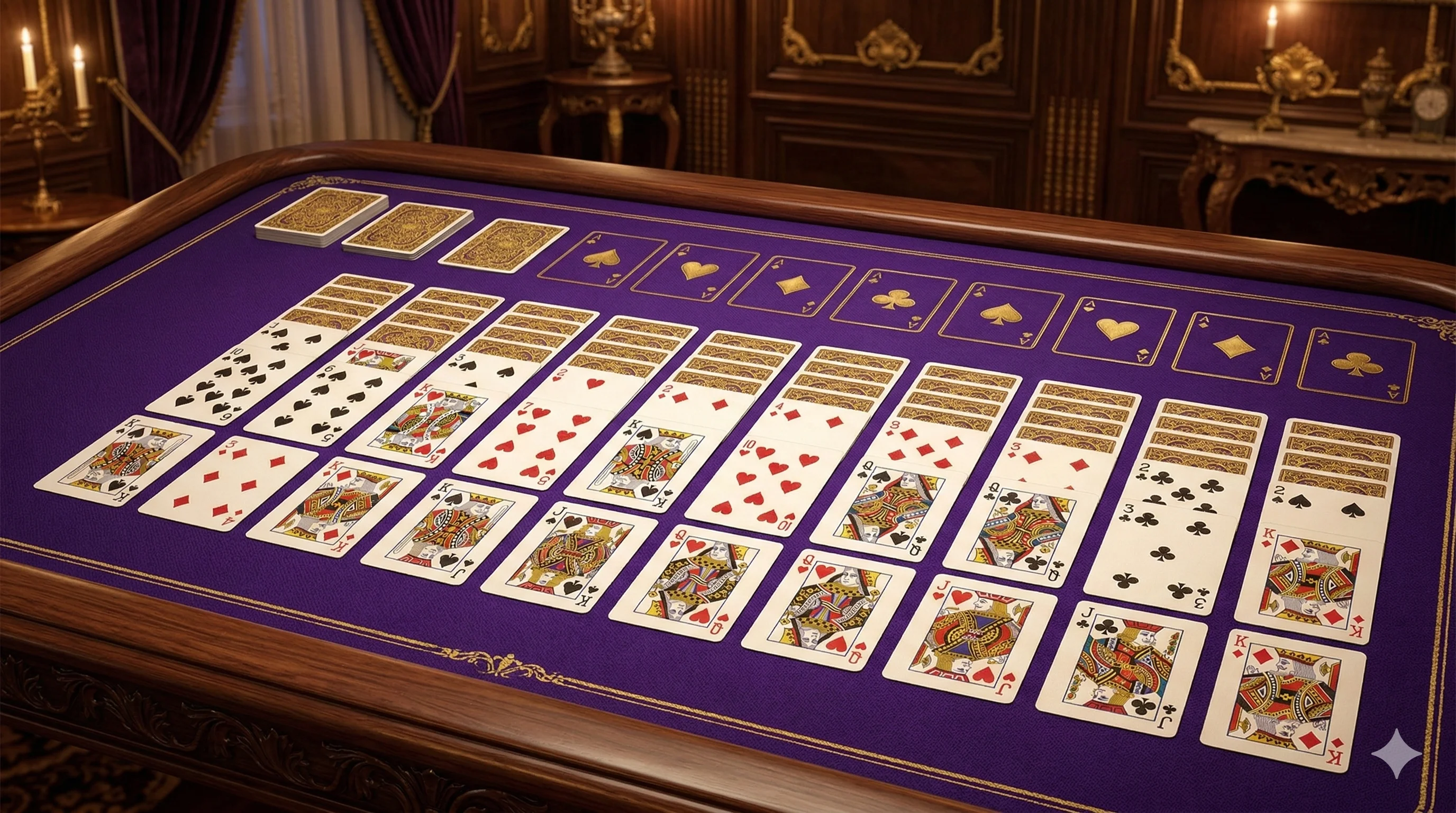
- Two Decks: 104 cards total (two complete 52-card decks)
- Tableau: Nine columns with cards dealt 1-9 (first column 1 card, ninth column 9 cards)
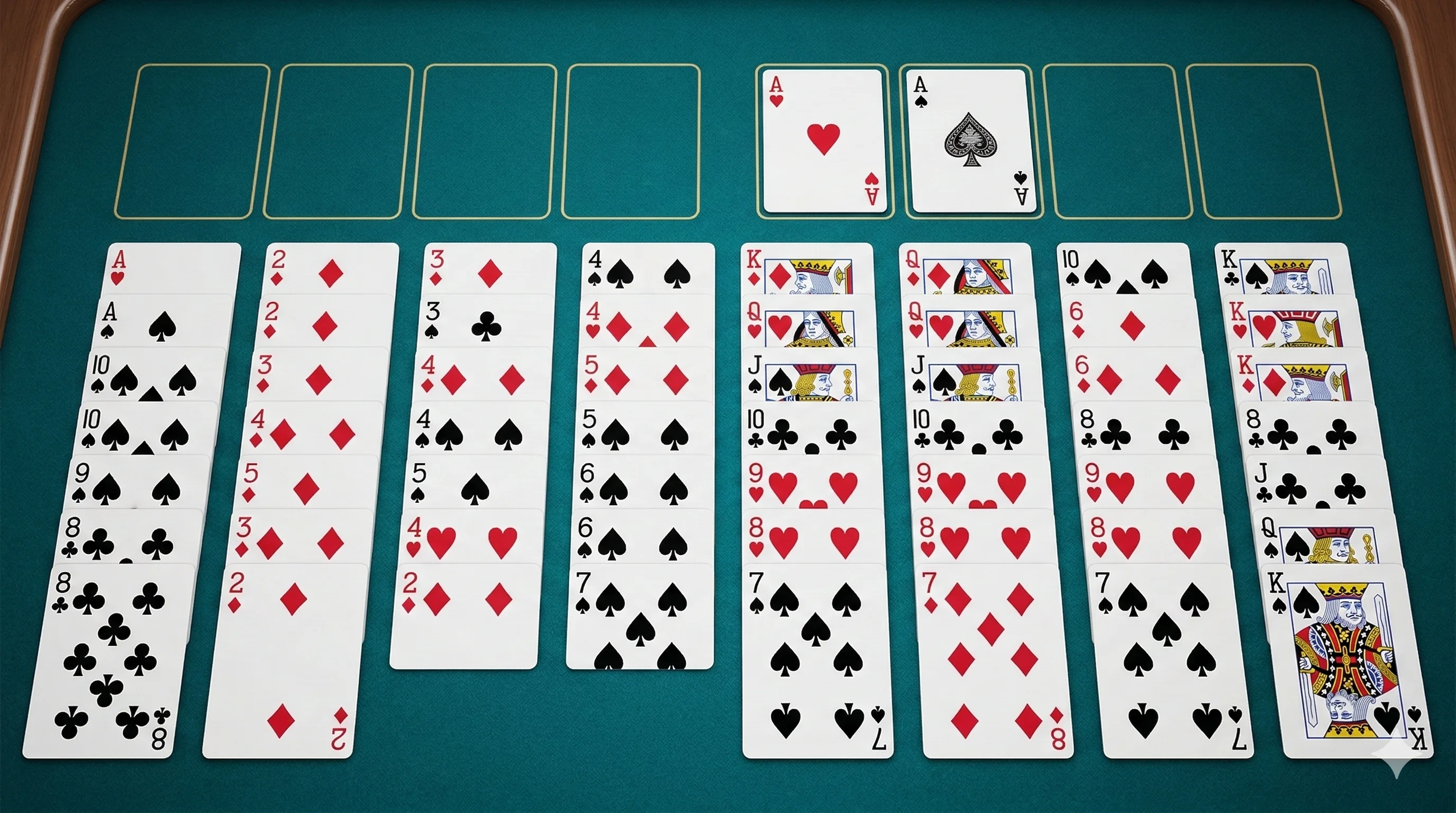
- Foundations: Eight empty piles (two for each suit)
- Stock: Remaining 59 cards after dealing tableau
- Waste: Cards drawn from stock
Basic Rules
- Tableau Building: Build down by alternating color (red on black, black on red)
- Moving Sequences: Can move built sequences as a unit
- Empty Columns: Only Kings (or sequences starting with King) can fill empty columns
- Foundation Building: Build up by suit from Ace to King (need to complete twice per suit)
- Stock Draw: Draw three cards at a time (or one, depending on variant)
- Unlimited Redeals: Can go through the stock unlimited times
Winning Strategy for Double Klondike
1. Manage Duplicate Cards Carefully
With two of every card, strategic choices matter:
- Don't rush to move both copies to foundations immediately
- Keep one copy in tableau for building flexibility
- Track which duplicates are still in the stock
- Use duplicates to create longer sequences
2. Prioritize Tableau Exposure
With nine columns, uncovering face-down cards is crucial:
- Focus on columns with more face-down cards
- Create empty columns to move King sequences
- Don't build foundations too quickly - keep tableau flexible
- Turn over cards before drawing from stock when possible
3. Empty Column Strategy
Nine columns means more opportunities:
- Try to maintain at least one empty column
- Use empty columns for reorganizing sequences
- Save empty columns for Kings that unlock other cards
- Don't waste empty columns on low-value moves
4. Foundation Building Timing
With eight foundations, balance is key:
- Build all suits evenly to maintain flexibility
- Don't complete one foundation too early
- Cards in foundations are locked - can't be retrieved
- Keep useful cards in tableau until necessary
5. Stock Management
With 59 cards in stock, plan your draws:
- Make all tableau moves before drawing more cards
- Track which cards have appeared in the waste
- Use unlimited redeals strategically
- Different draw patterns reveal different cards
6. Sequence Building
Longer sequences are possible with two decks:
- Build longer sequences for flexibility
- Moving sequences of 10+ cards is common
- Plan sequence moves several steps ahead
- Break sequences only when necessary
Differences from Regular Klondike
Key Changes
- 104 Cards: Two complete decks instead of one
- 9 Tableau Columns: Instead of 7
- 8 Foundations: Two for each suit instead of one
- 59 Stock Cards: Instead of 24
- Longer Games: Typically 15-30 minutes instead of 5-10
- More Complex: Requires more strategic thinking
Difficulty Comparison
Double Klondike is considered harder than regular Klondike:
- More cards to track and manage
- Duplicate cards create complex decisions
- Longer games mean more opportunities for mistakes
- But: More columns and unlimited redeals help
Tips for Success
For Beginners
- Start with Draw-1 mode for easier gameplay
- Focus on one section of the tableau at a time
- Don't worry about winning - focus on improving
- Learn from each game and adjust strategy
For Advanced Players
- Try Draw-3 mode for maximum challenge
- Track card locations mentally
- Plan 5-7 moves ahead
- Experiment with different foundation building timing
Frequently Asked Questions
Is Double Klondike harder than regular Klondike?
Generally yes, but in different ways. While you have more columns and unlimited redeals (easier), you also have twice as many cards to manage and more complex decision-making (harder). Win rates are typically lower than regular Klondike.
How long does a typical game take?
Most games take 15-30 minutes, about 2-3 times longer than regular Klondike. This makes it perfect for when you want a more involved solitaire session.
Can I win every game?
No, but with unlimited redeals and good strategy, win rates are higher than you might expect - skilled players can win 30-40% of games with Draw-1, and 15-25% with Draw-3.
Should I use Draw-1 or Draw-3?
Draw-1 is recommended for beginners or when learning the game. Draw-3 provides more challenge for experienced players. You can switch between them to find your preferred difficulty.
What's the best way to improve?
Focus on: (1) Not building foundations too quickly, (2) Creating and maintaining empty columns, (3) Building longer tableau sequences, and (4) Making all tableau moves before drawing from stock.
Is this the same as Spider Solitaire?
No! While both use multiple decks, Spider uses different rules. Double Klondike uses standard Klondike rules with alternating colors, while Spider builds down by suit with different moving rules.
Ready for the ultimate Klondike challenge? Play Double Klondike now!