Play Spiderette Solitaire Online - Spider's Compact Challenge
Spiderette Solitaire brings the strategic depth of Spider Solitaire to a single-deck format (52 cards instead of 104). Perfect for players who love Spider's same-suit building but want faster games with less overwhelming complexity. Same satisfying gameplay, half the cards, quicker victories!
How to Play Spiderette Solitaire
Objective: Build four complete same-suit sequences from King down to Ace in the tableau, which are then automatically removed.
Game Setup
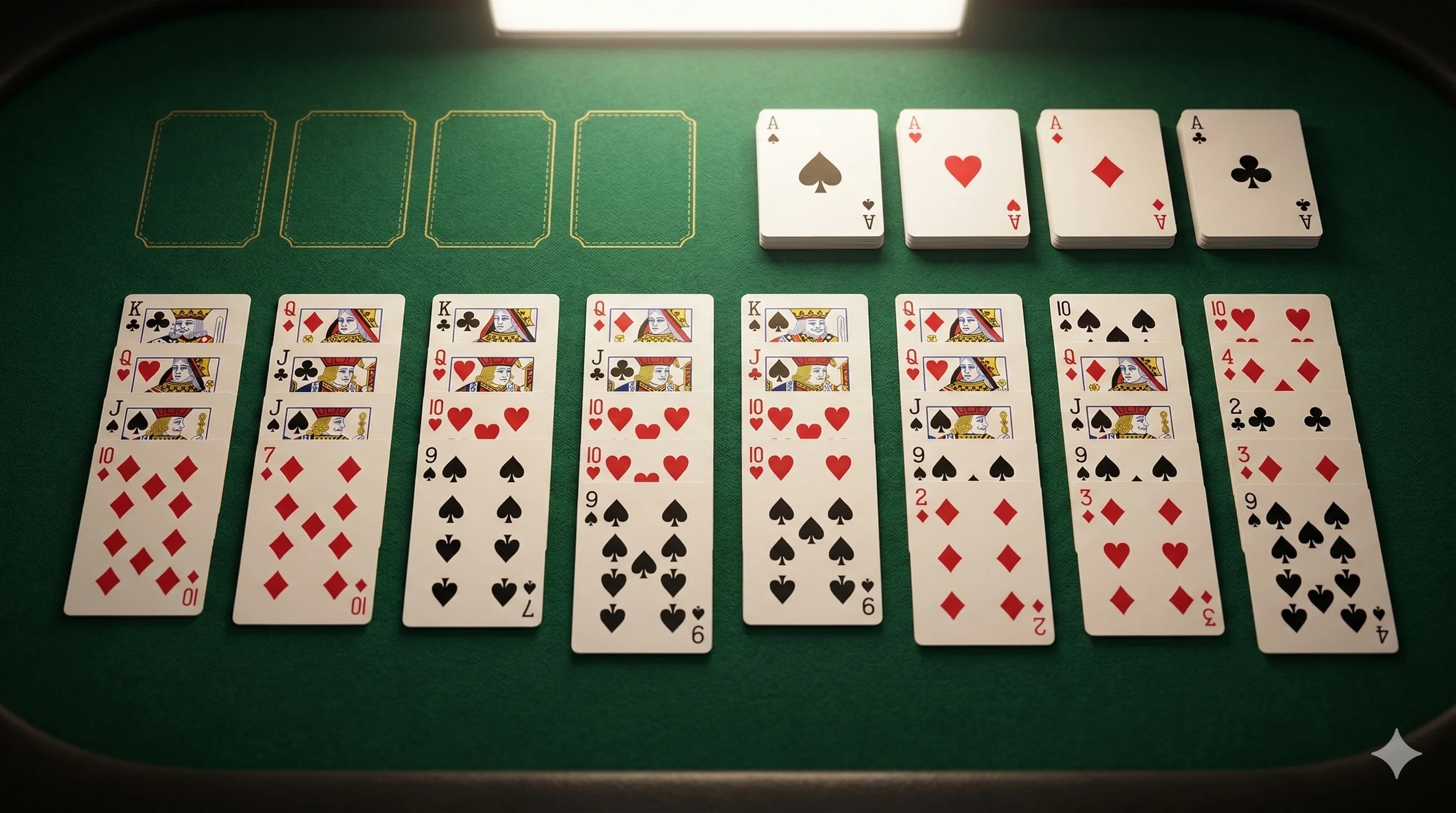
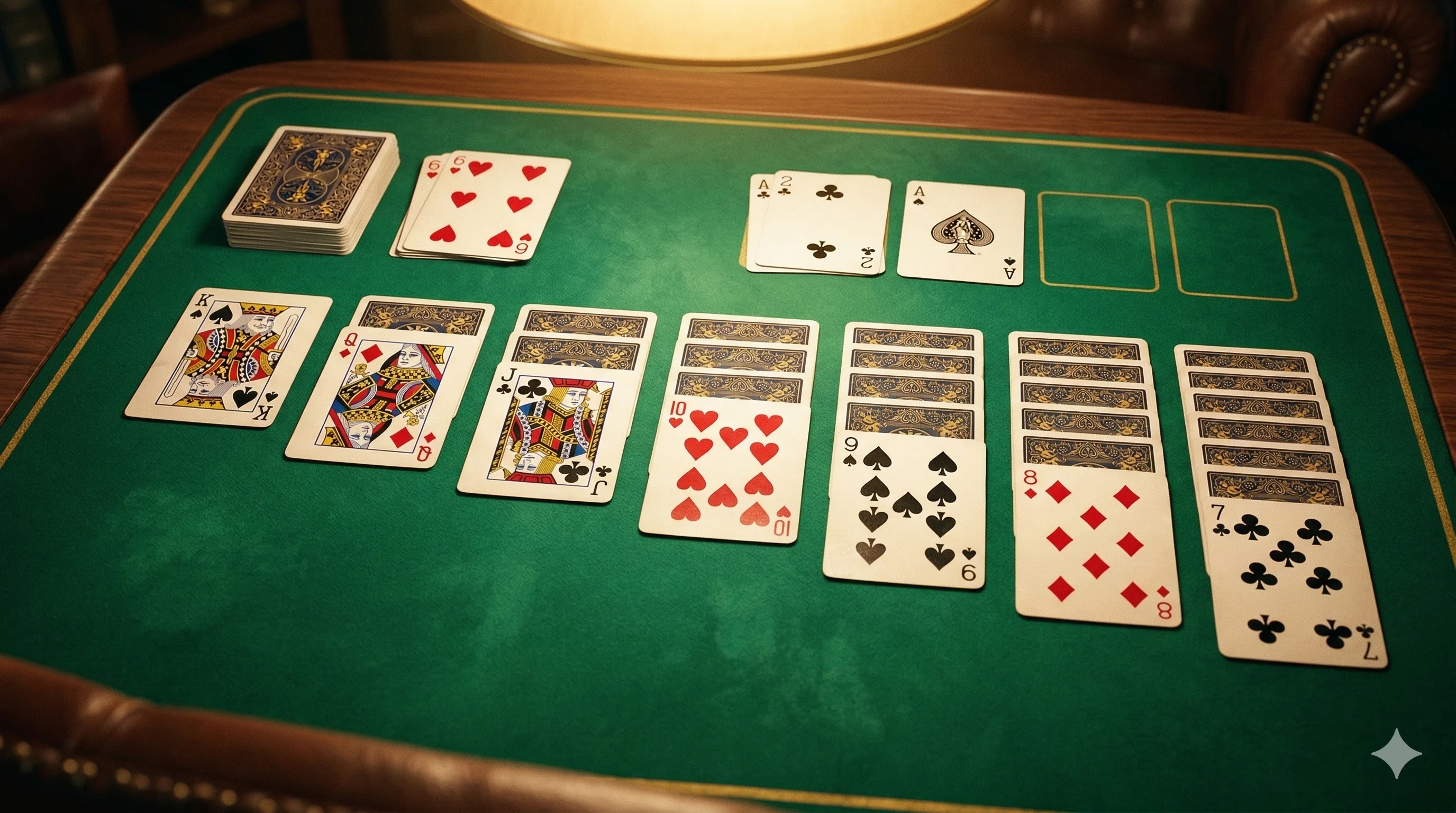
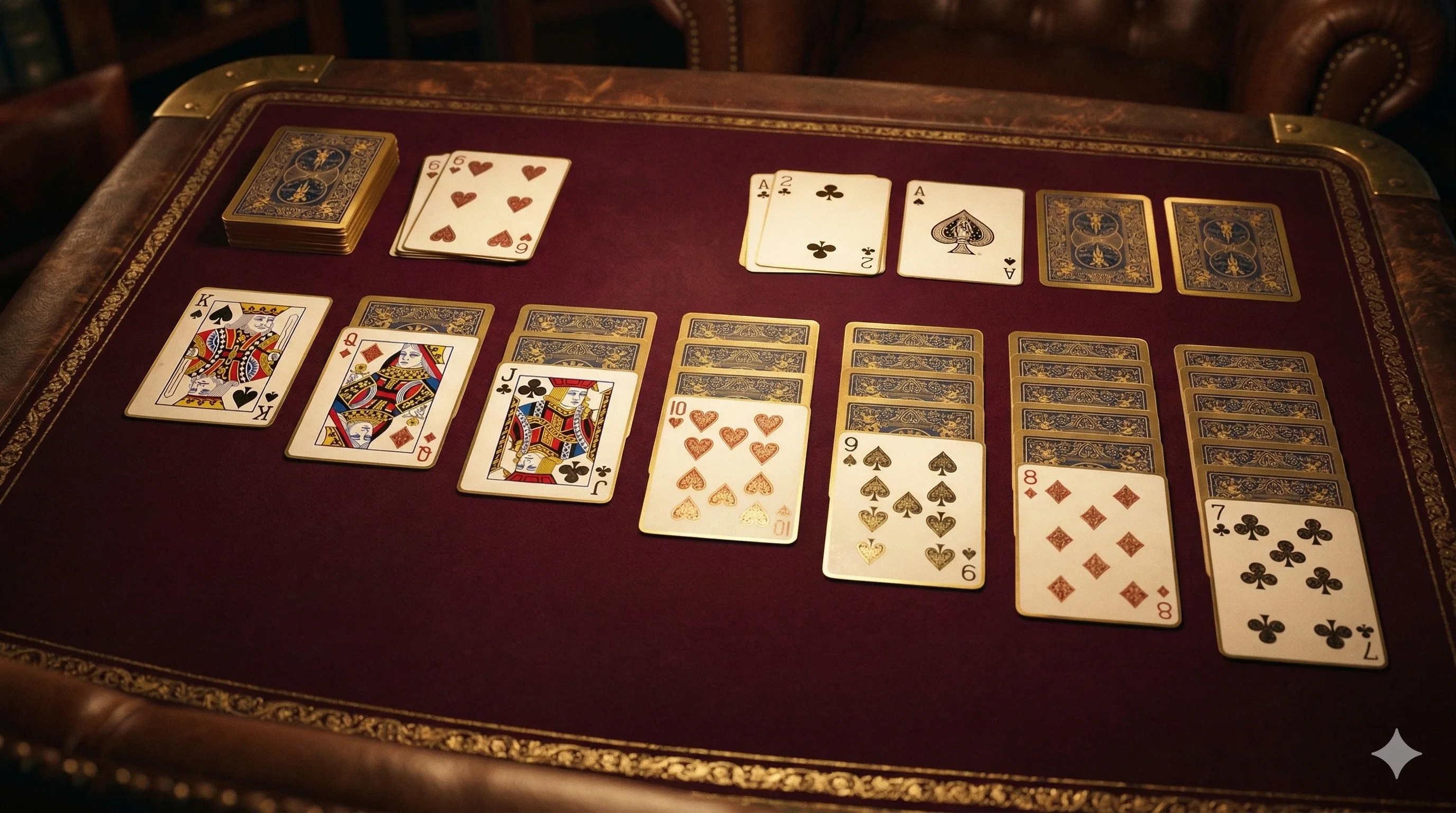
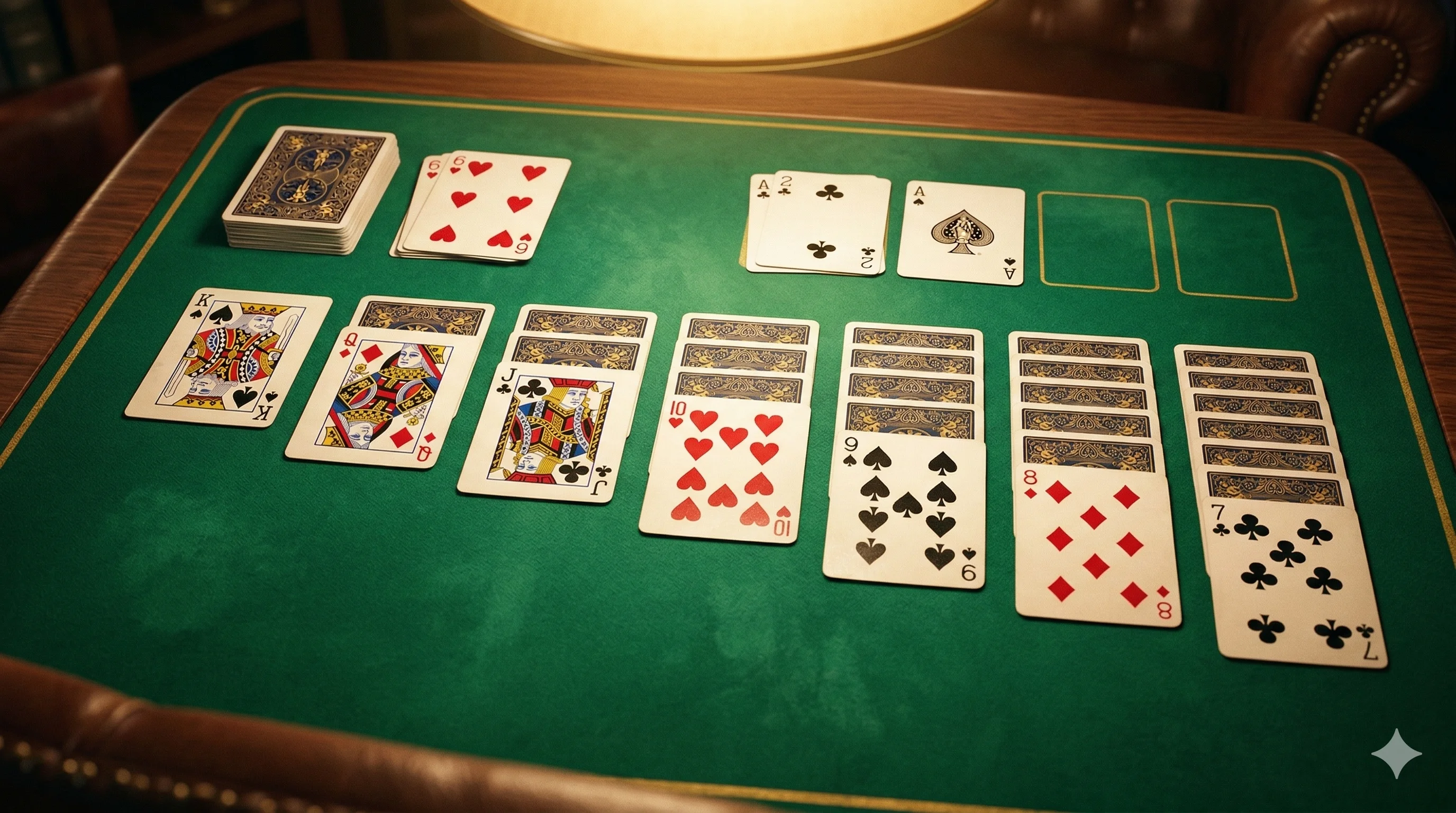
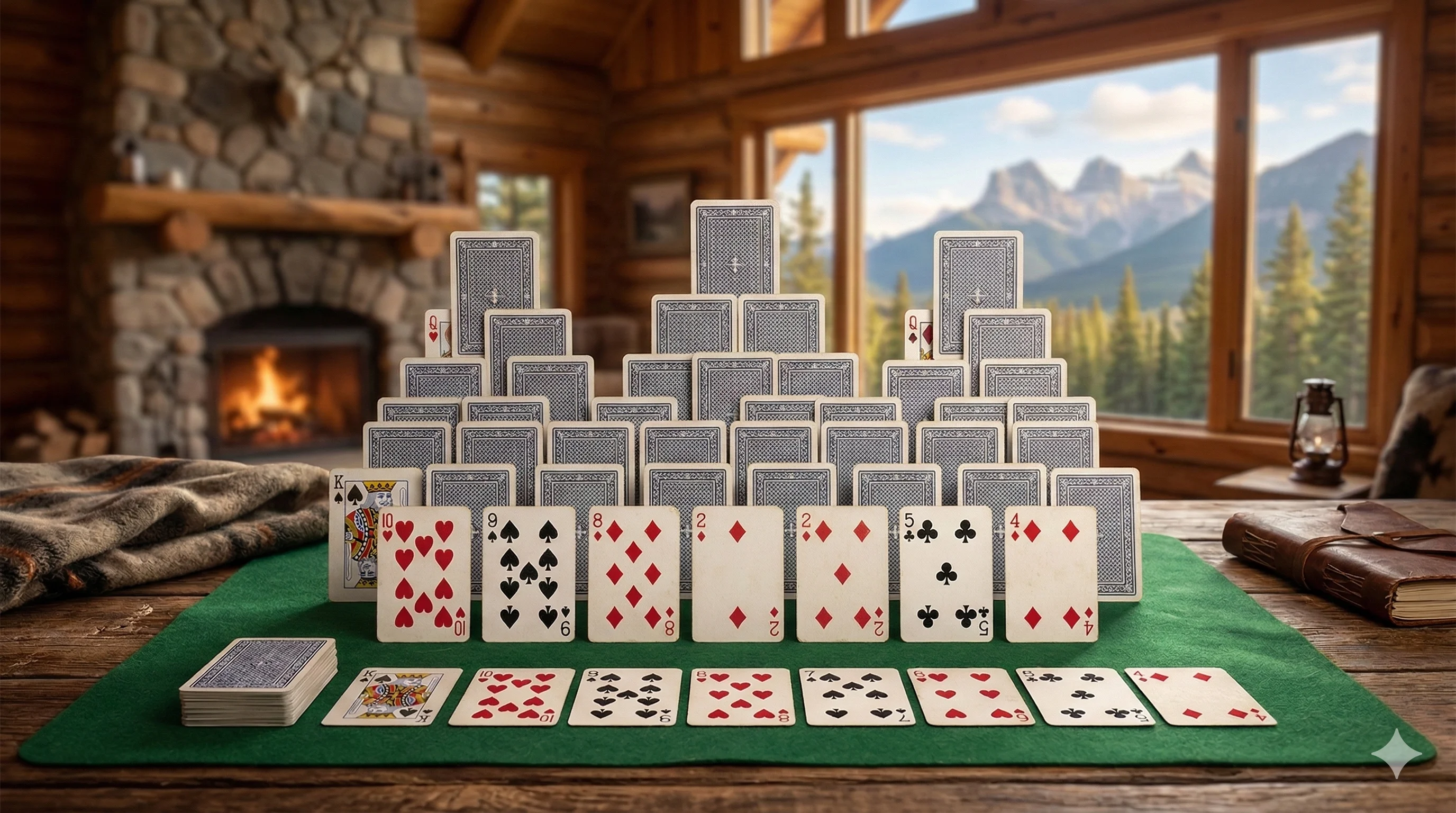
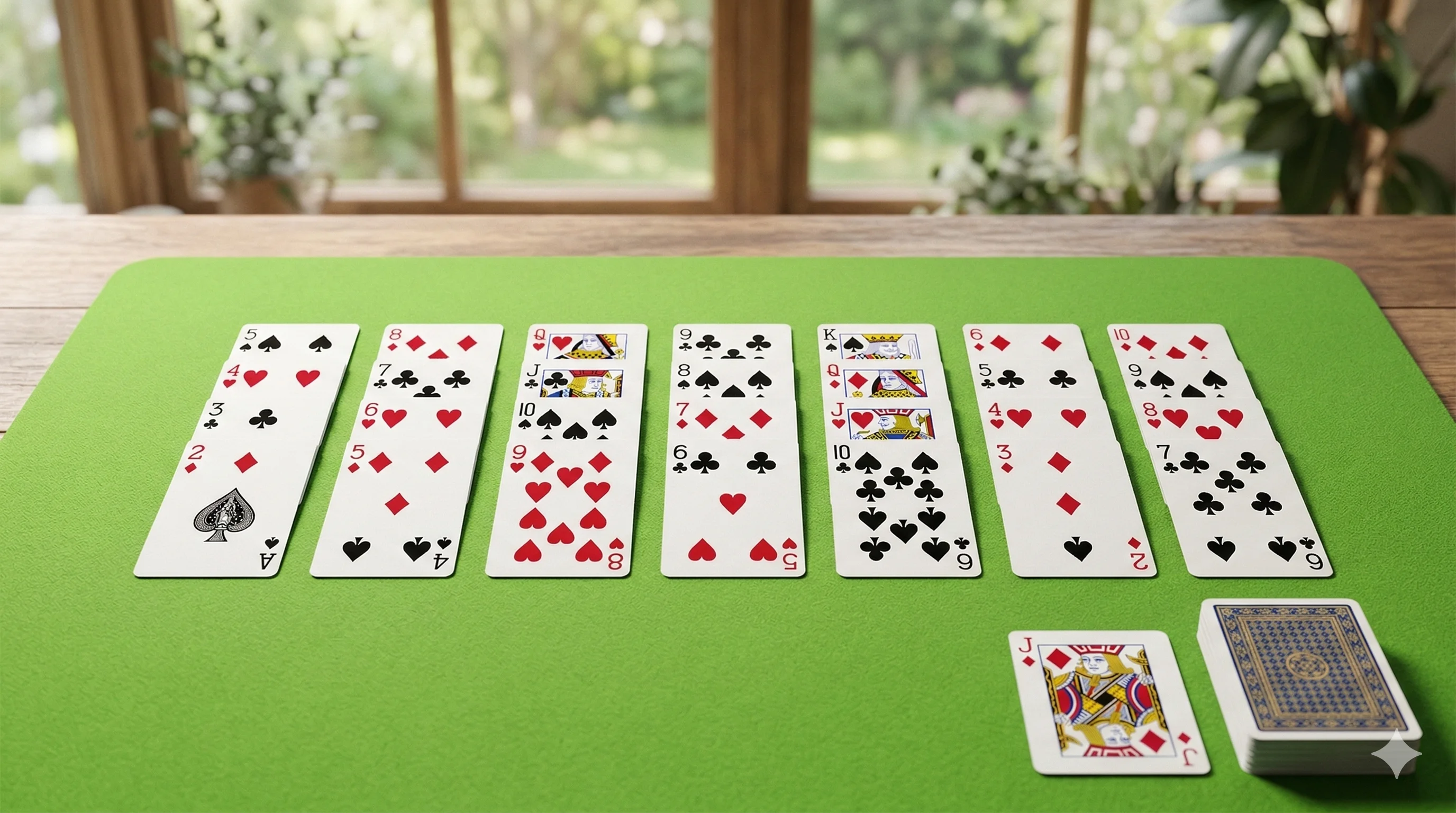
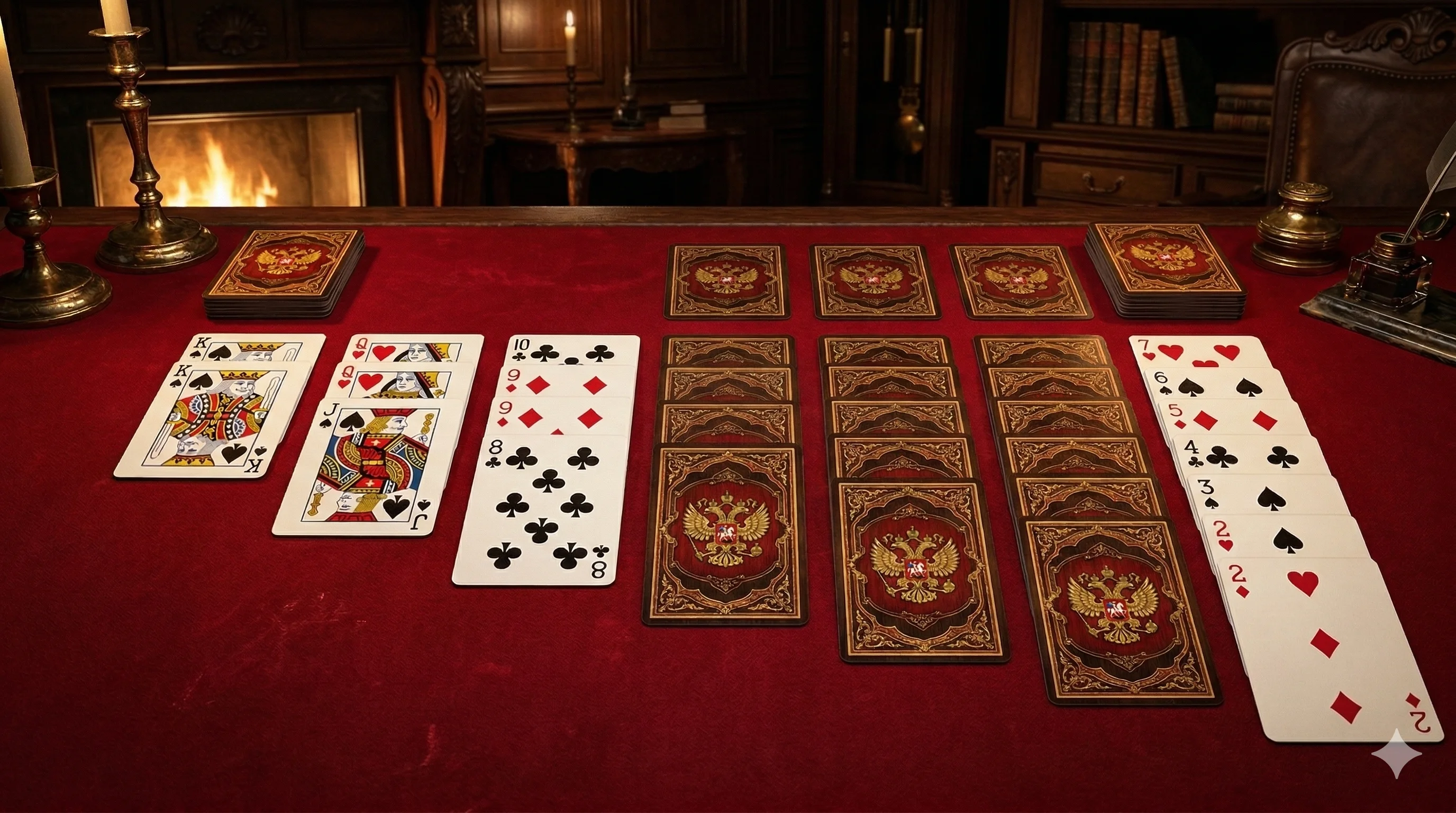
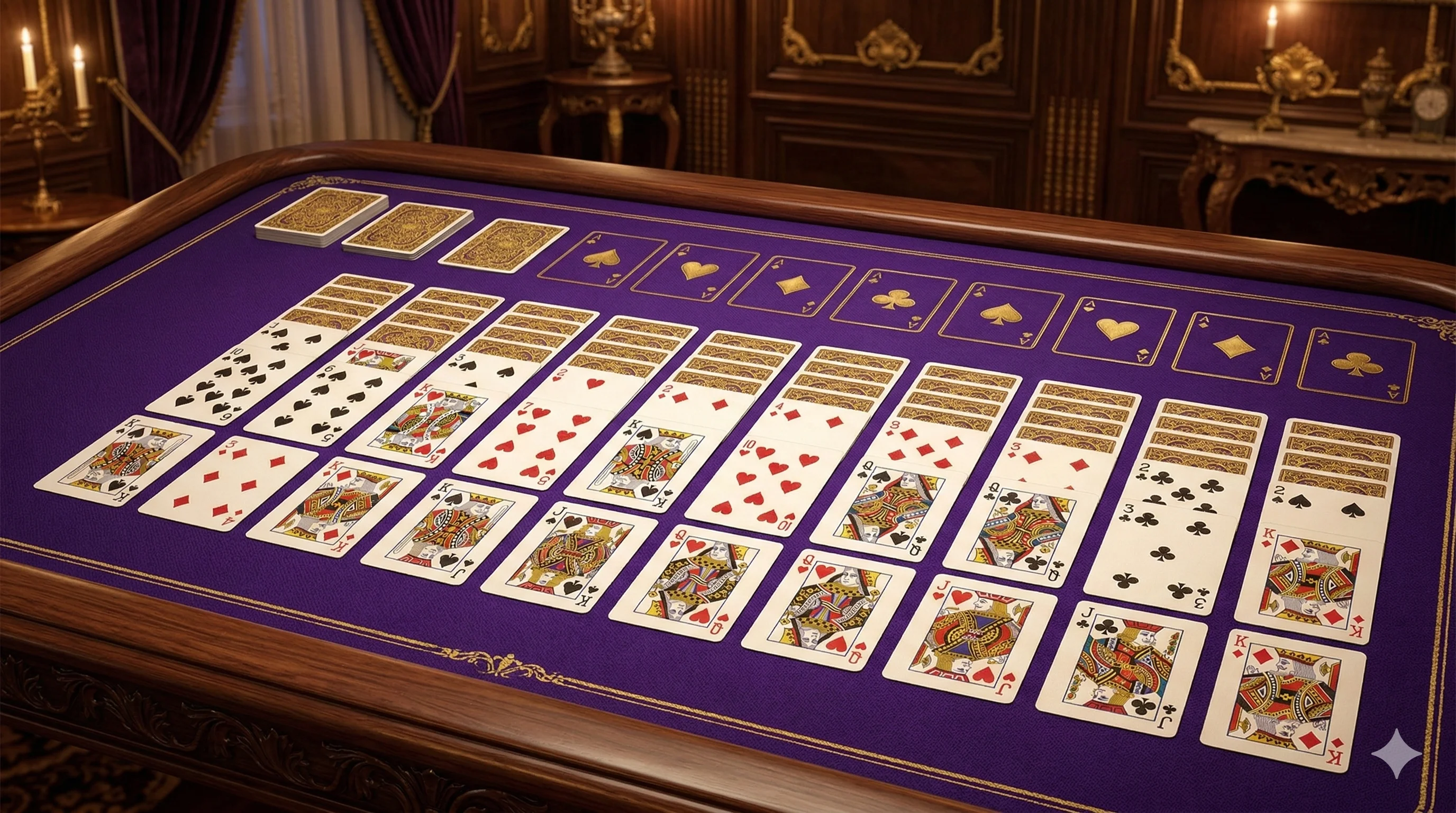
- Tableau: 7 columns - first 3 columns have 5 cards each, last 4 columns have 4 cards each (31 cards total)
- Stock: Remaining 21 cards, face-down
- Deal Pattern: Top card of each column starts face-up, rest face-down
- No Foundations: Complete sequences are removed directly from tableau
Basic Rules
- Tableau Building: Build DOWN in rank, regardless of suit (K on A, Q on K, etc.)
- Moving Sequences: Can move groups of cards if they're in same-suit descending sequence
- Mixed Sequences: Can build mixed suits, but only same-suit sequences move as units
- Dealing from Stock: When stuck, deal one card to each of the 7 columns (7 cards total per deal)
- Complete Sequences: K-Q-J-10-9-8-7-6-5-4-3-2-A = removed automatically
- Win Condition: Remove all four complete sequences (one per suit)
Same-Suit Sequences (Critical!)
- You can build 6 on 7 (mixed suits), but this sequence won't move together
- You can build 6 on 7 (same suit), and this sequence moves as a unit
- Goal: Build pure same-suit sequences to enable moving long runs
- Mixed-suit building is allowed but creates "locked" sequences
Winning Strategy for Spiderette Solitaire
1. Prioritize Same-Suit Builds
The golden rule of Spiderette:
- ALWAYS prefer same-suit builds over mixed-suit builds when both are available
- 9 on 10 is FAR better than 9 on 10
- Same-suit sequences move together, giving you tactical flexibility
- Mixed-suit sequences create "knots" that block future moves
- Only build mixed suits when absolutely necessary
2. Expose Face-Down Cards ASAP
Your primary early-game goal:
- Each face-down card is hidden information - expose them quickly
- Prioritize moves that flip face-down cards over moves that don't
- Getting all cards face-up gives you perfect information for planning
- The faster you expose cards, the sooner you can strategize effectively
3. Build Complete Sequences Methodically
Don't rush to complete sequences too early:
- A partial sequence like K→7 is USEFUL for building and moving cards
- Completing it to K→A removes it, reducing your tableau options
- Build sequences when: (1) they're blocking progress, or (2) you're close to winning
- Keep useful partial sequences in play during mid-game
4. Empty Columns Are Gold
Creating empty columns should be a high priority:
- An empty column lets you move any card or sequence temporarily
- Use empty columns to reorganize mixed-suit sequences
- Use empty columns to extract buried cards
- Try to maintain at least one empty column from mid-game onward
- Focus on the shortest columns to create empties faster
5. Delay Stock Deals as Long as Possible
Each stock deal adds complexity:
- Dealing adds 7 cards, one to each column, covering existing cards
- Exhaust ALL possible moves before dealing from stock
- Sometimes a non-obvious sequence of moves unlocks progress
- Create empty columns before dealing if possible
- You get 3 deals total (21 cards ÷ 7 = 3 deals)
6. Track Suit Distribution
With only 13 cards per suit, tracking is manageable:
- If you see 10 spades visible, only 3 remain face-down/in stock
- If building a spade sequence, knowing which spades are still hidden helps planning
- Avoid dedicating multiple columns to the same suit early
- Spread suit-building efforts across all four suits
Advanced Spiderette Tactics
The "Suit Consolidation" Method
Try to consolidate each suit into one or two columns:
- If Column A has K-Q-J and Column B has 10-9-8
- Move Column B onto Column A to create K→8 (one unified sequence)
- This frees Column B for other uses
- Consolidated suits are easier to complete and move
The "King Parking" Strategy
Kings can only be placed in empty columns:
- If you have an empty column, place a King there (with its sequence)
- Build that King down toward Ace throughout the game
- "King columns" become your sequence-building workspaces
- Try to have one dedicated King column per suit
The "Mixed-Suit Unwinding" Technique
When you create a mixed-suit sequence, plan to "unwind" it:
- Example: You build 6 on 7 on 8 (mixed: spade-heart-spade)
- Later, if 9 becomes available, move 7-6 onto 9
- Now 8 is the top card, and you can build same-suit spades on it
- Unwinding converts mixed sequences back to pure sequences
The "Ace Search"
Finding Aces is crucial to completing sequences:
- Each suit needs its Ace to complete the K→A sequence
- If you've built K down to 3, finding 2 and A completes the sequence
- Track which Aces you've seen and where buried Aces might be
- Sometimes you must deal from stock to access buried Aces
Spiderette vs. Spider Solitaire
Similarities
- Both build down in rank, preferring same suit
- Both remove complete K→A sequences
- Both allow dealing from stock when stuck
- Both reward same-suit consolidation
Differences
- Cards: Spiderette uses 1 deck (52 cards), Spider uses 2 decks (104 cards)
- Sequences: Spiderette removes 4 sequences total, Spider removes 8
- Game Length: Spiderette: 10-15 minutes, Spider: 20-40 minutes
- Difficulty: Spiderette is moderately easier - fewer cards means less overwhelming complexity
- Deals: Spiderette has 3 stock deals, Spider has 5
Common Spiderette Mistakes
Mistake 1: Building Mixed Suits Carelessly
New players build any legal sequence without considering suit. This creates tangled messes that can't be moved. ALWAYS prefer same-suit builds.
Mistake 2: Completing Sequences Too Early
Rushing to complete K→A sequences removes useful cards from play. Keep partial sequences (K→7) active until late game when you need to clear the tableau.
Mistake 3: Dealing from Stock Too Quickly
Dealing before exhausting move possibilities adds unnecessary cards. Always explore every possible move sequence before dealing.
Mistake 4: Ignoring Empty Columns
Not prioritizing empty column creation limits your tactical options. Work to clear the shortest column early in the game.
Mistake 5: Not Tracking Suits
Losing track of which cards remain in each suit leads to poor planning. Mentally note: "Seen 9 hearts, need 4 more to complete sequence."
Frequently Asked Questions
Can I move mixed-suit sequences?
NO - only same-suit descending sequences move as a unit. Example: K-Q-J moves together. K-Q-J does NOT move together (you can only move K alone, or Q-J as a mixed pair if J is bottom).
What happens when I complete a sequence?
When you build a complete same-suit K→A sequence (13 cards), it's automatically removed from the tableau. This frees up space and is one step toward winning (need to complete all 4 suits).
How hard is Spiderette compared to Spider?
Spiderette is moderately easier. Win rates: Spiderette (1 suit) ~90%, Spiderette (2 suits) ~40%, Spiderette (4 suits) ~15%. Compare to Spider: (1 suit) ~95%, (2 suits) ~25%, (4 suits) ~5%. Fewer cards = more manageable.
Should I play 1-suit, 2-suit, or 4-suit Spiderette?
1-Suit: Beginner-friendly, ~90% win rate, perfect for learning. 2-Suit: Intermediate challenge, ~40% win rate, balanced difficulty. 4-Suit: Expert challenge, ~15% win rate, very difficult. Start with 1-suit, graduate to 4-suit over time.
Can I place any card in an empty column?
YES, but Kings are most useful. Empty columns are valuable - use them strategically for Kings with sequences, or for temporarily storing sequences during reorganization.
What's a good time to beat Spiderette?
Most wins take 10-15 minutes for 2-suit, 15-25 minutes for 4-suit. Like Spider, Spiderette rewards thoughtful planning over speed. Take your time!
Is every Spiderette deal winnable?
NO - some deals are mathematically impossible. Estimated win rates with perfect play: 1-suit: ~95%, 2-suit: ~50%, 4-suit: ~25%. Many losses are due to unlucky card distribution, not player error.
Enjoy Spider's strategic depth in a faster format - play Spiderette now!